In professional translation, accuracy and consistency are essential. Whether it’s a technical manual, legal document, or marketing campaign – the use of correct terminology makes the difference between an amateur and a professional translation. Terminology databases and glossaries play a central role in ensuring quality, especially in projects involving multiple translators or multilingual versions.
Below, we explain why terminology databases are an indispensable part of every serious translation process.
What are terminology databases and glossaries?
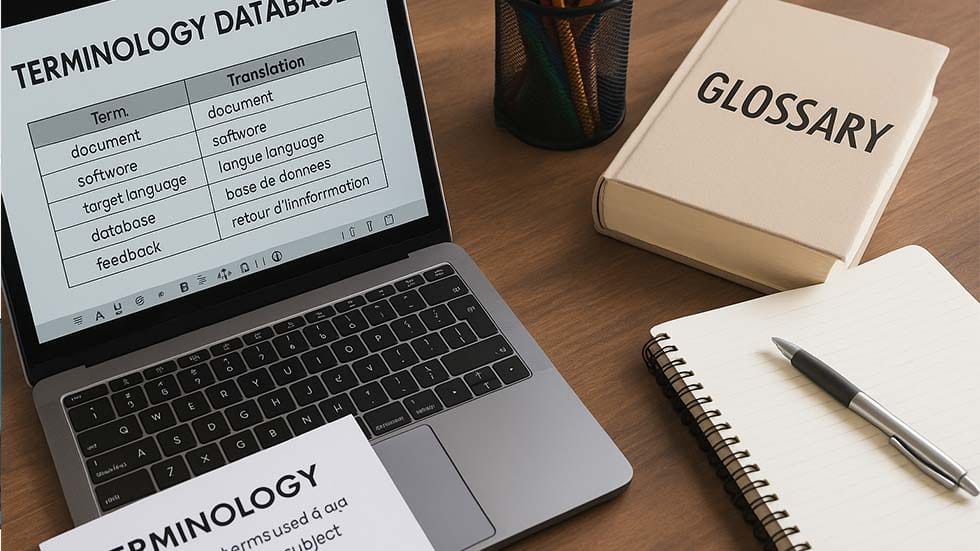
A terminology database is a structured collection of specialized terms, phrases, and their translations. It includes additional information such as definitions, context, field of use, and grammatical markers.
A glossary is a simpler form – a list of terms with their translations – often specific to a particular client, industry, or project.
Why are they important?
Terminology databases and glossaries provide:
- Terminological consistency: the same term is translated the same way throughout the document or project.
- Faster translator workflow: less time is spent researching terms.
- Brand alignment: companies often have their own terms, slogans, and tone that must be respected.
- Error minimization: especially in highly regulated industries (medicine, law, pharmaceuticals).
Who uses them and in which fields?
Terminology databases are most commonly used in the following areas:
- Pharmaceuticals and medicine (e.g., MedDRA terminology databases)
- Law and administration (legal expressions and formulations)
- Technology and engineering (specific technical terms)
- IT and software localization (interface elements, functionalities)
- Marketing and branding (brand terminology, tone of communication)
How are they created and maintained?
The first step is collecting terms from the client’s existing materials or previous translations.
The next phase is selecting preferred translations, with the help of subject matter experts or editors.
The database is regularly updated – new terms are added, and existing ones refined.
During the translation process, CAT tools (e.g., SDL Trados, MemoQ, Wordfast) are used to automatically suggest terms from the database.
Tips for Clients
If you are a client who regularly orders translations:
- Share internal terminology with the agency (e.g., internal glossaries, commonly used phrases).
- Review the first translations and provide feedback on terminology.
- Request the creation of a glossary if you don’t already have one – it saves time and money in the long term.
- Insist on the use of terminology databases for large or recurring projects.
Terminology databases are not a luxury – they are the foundation of professional and precise translation. Combined with experienced translators and the right technology, they ensure your message remains accurate, consistent, and clearly understood – in every language.
