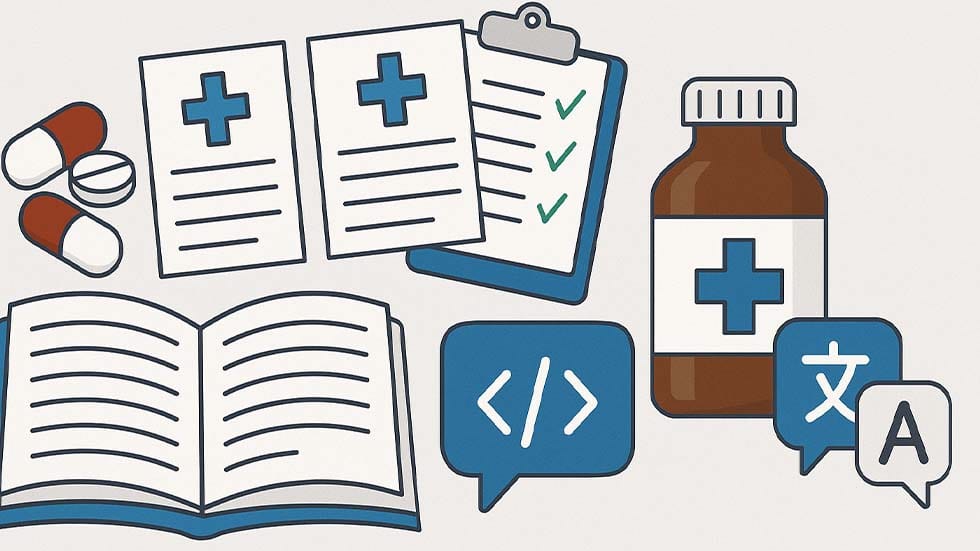
Translation in the pharmaceutical industry requires much more than strong language skills. Due to strict regulatory requirements, specialized terminology, and the potential consequences of errors, translations in this field must be precise, consistent, and compliant with the legislation of the target market.
Below are key challenges and guidelines to follow when translating pharmaceutical content.
1. Compliance with international regulations
The pharmaceutical sector is highly regulated, and every translation must adhere to relevant laws and guidelines, including:
- EMA (European Medicines Agency) in the EU
- FDA (Food and Drug Administration) in the USA
- ICH (International Council for Harmonisation of Technical Requirements for Pharmaceuticals)
- WHO (World Health Organization)
Documents such as drug leaflets, labels, clinical studies, and certificates must follow standardized formats and terminology prescribed by the competent authorities.
2. Types of documents that require translation
The most commonly translated materials in this sector include:
- Drug instructions and packaging inserts (SmPC, PIL)
- Clinical studies, protocols, and reports
- Product labels and declarations
- Documentation for drug registration
- Clinical trial agreements and ethics forms
- Scientific papers and regulatory submissions
Each category has specific requirements regarding format, structure, and terminology.
3. Terminological consistency is essential
Pharmaceutical texts use strictly defined terms. A single mistranslation can change the meaning and lead to serious consequences. That’s why it’s crucial to:
- Use official glossaries and terminology databases (e.g., MedDRA, EDQM)
- Maintain client-specific terminology databases for consistency
- Work with translators experienced in biomedicine or pharmacy
Consistency must be maintained not only within a single document, but across all documents related to the same product.
4. Legal and ethical implications
Translation in this industry must respect ethics, confidentiality, and legal standards. This is especially important for:
- Informed consent forms in clinical trials
- Patient safety declarations
- Descriptions of side effects and contraindications
Unclear or incorrect translation can endanger user safety, which may result in legal consequences for the manufacturer or distributor.
5. Localization for the target market
Regulations and requirements vary from country to country. Translation must be localized according to the market’s specific needs:
- Use of local measurement units and expressions
- Adapting legal wording and healthcare norms
- Using official languages of the country in question
For example, in Switzerland, translation is often required in German, French, and Italian, even for the same product.
How to choose a translator or agency?
In this field, a translator must combine technical knowledge with linguistic precision. When selecting a provider, make sure that:
- The translator has experience in pharmaceutical terminology
- The agency uses CAT tools to manage terminology
- There is an internal quality control and proofreading process in place
- Certified translations can be provided if required by regulations
Alfa Prevod offers specialized pharmaceutical translation services, with strict adherence to regulatory guidelines and the highest level of linguistic precision. Whether you need translations for drug registration documentation, clinical studies, or product labeling – our team of experts ensures accuracy, reliability, and trust.
Let us support your compliance and communication with expertly translated materials.
